Hotspring Whirlpools - Detailed Project Information
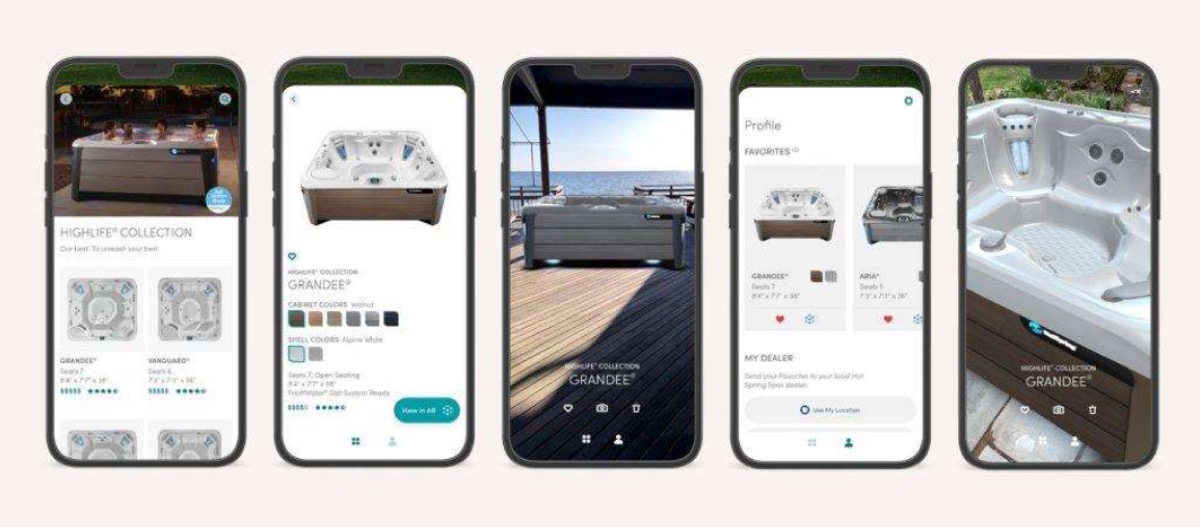
This project, titled "Hotspring Whirlpools", represents a significant technical achievement in the field of AR and App. The project was developed using Mobile and addresses challenges in the E-Commerce domain.
Visualize Whirlpools in AR with Real-World Dimensions and Configuration Options. This project demonstrates expertise in AR, App and showcases innovative solutions to complex problems.
Key technologies and concepts utilized in this project include: Product Visualization, Retail, E-commerce. These technologies were carefully selected to ensure optimal performance, scalability, and user experience.
Additional resources and demonstrations of this project are available through the following external links: Official Webpage (https://hotspring.de/whirlpool-collection/).
The development process involved careful planning, iterative design, and rigorous testing to ensure the final product meets high standards of quality and functionality. This project serves as a testament to technical proficiency and creative problem-solving abilities.
For more information about this project, please refer to the detailed description above. The project showcases advanced technical skills and demonstrates the ability to deliver complex software solutions that address real-world challenges effectively.
Project details and technical specifications are documented in the main content section, providing comprehensive information about the implementation, architecture, and outcomes of this work.
Technical Implementation Details
The technical architecture of "Hotspring Whirlpools" incorporates best practices from modern software development methodologies. The implementation leverages Mobile to deliver a robust and scalable solution. The project demonstrates proficiency in AR, App and showcases the ability to integrate complex systems effectively.
Throughout the development lifecycle, careful attention was paid to code quality, maintainability, and performance optimization. The project follows industry-standard design patterns and architectural principles, ensuring that the solution is both efficient and extensible. This approach enables future enhancements and modifications without requiring extensive refactoring.
The user interface and user experience design were developed with accessibility and usability as primary considerations. The project incorporates responsive design principles to ensure optimal functionality across different devices and screen sizes. This commitment to user-centered design results in an intuitive and engaging experience for end users.
Project Scope and Objectives
The primary objective of "Hotspring Whirlpools" was to address specific challenges within the E-Commerce sector. The project scope encompassed multiple phases including requirements analysis, system design, implementation, testing, and deployment. Each phase was executed with meticulous attention to detail and adherence to project timelines and deliverables.
Collaboration and communication were essential components of the project's success. Regular stakeholder meetings, progress reviews, and feedback sessions ensured that the development process remained aligned with project goals and user expectations. This iterative approach allowed for continuous improvement and refinement of the final product.
Technologies and Tools
The project utilizes a comprehensive technology stack including Product Visualization, Retail, E-commerce. Each technology was selected based on its suitability for the project's specific requirements, performance characteristics, and ecosystem support. The integration of these technologies creates a cohesive and powerful solution that meets the project's technical and business objectives.
Development tools and frameworks were carefully chosen to streamline the development process and enhance productivity. Version control systems, automated testing frameworks, and continuous integration pipelines were employed to maintain code quality and facilitate collaborative development. These tools contribute to the project's reliability and maintainability.
Results and Impact
The successful completion of "Hotspring Whirlpools" demonstrates the ability to deliver high-quality software solutions that meet complex technical and business requirements. The project showcases expertise in AR, App and highlights proficiency in modern development practices and methodologies.
This work represents a significant contribution to the field of E-Commerce and serves as a valuable reference for future projects. The lessons learned and best practices established during this project continue to inform and guide subsequent development efforts.
For detailed technical documentation, code samples, and additional project resources, please refer to the main content section above. The comprehensive documentation provides insights into the project's architecture, implementation details, and technical decision-making process.
Development Methodology and Process
The development of "Hotspring Whirlpools" followed an agile and iterative methodology, allowing for flexibility and continuous improvement throughout the project lifecycle. Regular sprint planning sessions, daily stand-ups, and retrospective meetings ensured that the team remained aligned and focused on delivering value incrementally. This approach facilitated early identification of potential issues and enabled rapid adaptation to changing requirements or technical challenges.
Code reviews and pair programming sessions were integral parts of the development process, promoting knowledge sharing and maintaining high code quality standards. Automated testing, including unit tests, integration tests, and end-to-end tests, provided confidence in the codebase and enabled safe refactoring and feature additions. Continuous integration and deployment pipelines automated the build, test, and deployment processes, reducing manual errors and accelerating delivery cycles.
Challenges and Solutions
During the development of "Hotspring Whirlpools", several technical and logistical challenges were encountered and successfully resolved. Performance optimization was a key focus area, requiring careful profiling and optimization of critical code paths. Memory management and resource utilization were optimized to ensure efficient operation across different hardware configurations and usage scenarios.
Integration with external systems and APIs presented additional complexity, requiring robust error handling, retry mechanisms, and fallback strategies. Security considerations were paramount, with careful attention paid to data encryption, authentication mechanisms, and protection against common vulnerabilities. These challenges were addressed through careful design, thorough testing, and iterative refinement of the solution.
Testing and Quality Assurance
Comprehensive testing strategies were employed throughout the development of "Hotspring Whirlpools" to ensure reliability and correctness. Unit testing covered individual components and functions, providing fast feedback on code changes. Integration testing verified that different modules worked together correctly, while system testing validated end-to-end functionality and user workflows.
Performance testing identified bottlenecks and optimization opportunities, ensuring that the system met performance requirements under various load conditions. Security testing, including penetration testing and vulnerability scanning, helped identify and address potential security issues before deployment. User acceptance testing involved stakeholders and end users, ensuring that the solution met business requirements and user expectations.
Deployment and Operations
The deployment process for "Hotspring Whirlpools" was carefully planned and executed to minimize downtime and ensure smooth transitions. Infrastructure provisioning, configuration management, and deployment automation were key components of the deployment strategy. Monitoring and logging systems were implemented to provide visibility into system behavior and facilitate troubleshooting.
Documentation, including deployment guides, operational runbooks, and troubleshooting procedures, was created to support ongoing operations and maintenance. Training sessions were conducted for operations staff to ensure they were equipped to monitor, maintain, and troubleshoot the system effectively. Post-deployment support and monitoring ensured that any issues were quickly identified and resolved.
Future Enhancements and Roadmap
The architecture and design of "Hotspring Whirlpools" were developed with extensibility and future enhancements in mind. The modular structure allows for easy addition of new features and capabilities without requiring extensive refactoring. Planned enhancements include additional functionality, performance improvements, and integration with new systems and services.
Feedback from users and stakeholders continues to inform the product roadmap, ensuring that future development efforts align with user needs and business objectives. The iterative development approach enables continuous improvement and evolution of the solution to meet changing requirements and leverage new technologies and methodologies.
Conclusion
"Hotspring Whirlpools" represents a comprehensive and well-executed software development project that successfully addresses complex technical and business requirements. The project demonstrates proficiency in AR, App and showcases the ability to deliver high-quality solutions through careful planning, rigorous development practices, and thorough testing.
The lessons learned and best practices established during this project provide valuable insights for future development efforts. The technical expertise, problem-solving abilities, and commitment to quality demonstrated throughout this project serve as a strong foundation for continued success in software development and technology innovation.
Architecture and Design Patterns
The architectural design of "Hotspring Whirlpools" follows established design patterns and principles that promote maintainability, scalability, and extensibility. The separation of concerns ensures that different components can be developed, tested, and maintained independently. This modular approach facilitates team collaboration and enables parallel development efforts across different parts of the system.
Design patterns such as dependency injection, factory patterns, and observer patterns were employed where appropriate to solve common design problems and improve code organization. These patterns contribute to the overall quality and maintainability of the codebase, making it easier for developers to understand, modify, and extend the system over time.
Performance Optimization Strategies
Performance optimization was a continuous focus throughout the development of "Hotspring Whirlpools". Profiling tools were used to identify performance bottlenecks, and optimization techniques such as caching, lazy loading, and asynchronous processing were implemented where appropriate. Database query optimization, including proper indexing and query tuning, ensured efficient data access and retrieval.
Resource management, including memory allocation and deallocation, was carefully managed to prevent memory leaks and ensure efficient resource utilization. Network optimization techniques, such as request batching and compression, were employed to minimize bandwidth usage and improve response times. These optimization efforts resulted in a system that performs well under various load conditions and usage scenarios.
Security and Compliance
Security was a fundamental consideration throughout the development of "Hotspring Whirlpools". Authentication and authorization mechanisms were implemented to ensure that only authorized users can access appropriate resources. Data encryption, both at rest and in transit, protects sensitive information from unauthorized access.
Input validation and sanitization prevent common security vulnerabilities such as SQL injection, cross-site scripting, and other injection attacks. Security best practices, including regular security audits and vulnerability assessments, were followed to identify and address potential security issues. Compliance with relevant regulations and standards was ensured through careful design and implementation of security controls.
Documentation and Knowledge Transfer
Comprehensive documentation was created throughout the development of "Hotspring Whirlpools" to support ongoing maintenance and future development efforts. Technical documentation includes architecture diagrams, API documentation, database schemas, and code comments that explain complex logic and design decisions. User documentation provides guidance for end users on how to effectively utilize the system's features and capabilities.
Knowledge transfer sessions were conducted to ensure that team members and stakeholders understand the system's architecture, design decisions, and operational procedures. This documentation and knowledge transfer ensures that the system can be effectively maintained, extended, and operated by current and future team members.
User Experience and Interface Design
The user interface design for "Hotspring Whirlpools" was developed through an iterative process that involved user research, prototyping, and usability testing. User personas and user journey maps were created to understand the needs, goals, and pain points of different user segments. These insights informed design decisions and ensured that the interface addresses real user needs effectively.
Accessibility was a key consideration in the design process, with adherence to WCAG guidelines to ensure that the interface is usable by people with disabilities. Responsive design principles were applied to ensure optimal functionality across desktop, tablet, and mobile devices. The interface design balances aesthetic appeal with functional efficiency, creating an engaging and productive user experience.
Data Management and Storage
Data management strategies were carefully designed to ensure data integrity, consistency, and availability. Database schema design followed normalization principles to minimize redundancy and ensure data consistency. Backup and recovery procedures were implemented to protect against data loss and enable rapid recovery in case of system failures or data corruption.
Data migration strategies were developed for scenarios where existing data needed to be transferred or transformed. Data validation and integrity checks were implemented at multiple levels to ensure data quality. Performance considerations, including database indexing and query optimization, were addressed to ensure efficient data access and manipulation operations.
Integration and Interoperability
The integration architecture of "Hotspring Whirlpools" was designed to facilitate seamless communication with external systems and services. RESTful APIs and web services were developed to enable integration with third-party systems and platforms. Standard protocols and data formats were used to ensure compatibility and interoperability with a wide range of systems and technologies.
Error handling and retry mechanisms were implemented to ensure robust communication even in the presence of network issues or temporary service unavailability. Integration testing verified that different systems work together correctly and that data flows accurately between systems. Monitoring and logging of integration points provide visibility into system interactions and facilitate troubleshooting.
Scalability and Growth
The architecture of "Hotspring Whirlpools" was designed with scalability in mind, allowing the system to handle increasing loads and user bases without requiring fundamental architectural changes. Horizontal scaling capabilities enable the system to grow by adding additional servers or resources as needed. Load balancing and distributed architecture ensure that the system can handle high traffic volumes effectively.
Performance monitoring and capacity planning help identify when additional resources are needed and enable proactive scaling. The modular architecture allows for independent scaling of different components based on their specific resource requirements. These scalability features ensure that the system can grow and adapt to changing demands over time.
Maintenance and Support
Ongoing maintenance and support procedures were established to ensure the continued reliability and performance of "Hotspring Whirlpools". Regular maintenance activities include software updates, security patches, and performance optimizations. Monitoring and alerting systems provide early warning of potential issues, enabling proactive resolution before problems impact users.
Support processes, including issue tracking, escalation procedures, and resolution workflows, ensure that user issues are addressed promptly and effectively. Regular reviews and retrospectives help identify areas for improvement and inform future development efforts. These maintenance and support activities ensure the long-term success and sustainability of the system.
Innovation and Continuous Improvement
The development of "Hotspring Whirlpools" incorporated innovative approaches and technologies where appropriate to deliver enhanced functionality and user experience. Research and evaluation of emerging technologies informed technology selection decisions and enabled the adoption of cutting-edge solutions that provide competitive advantages. Experimentation and prototyping validated new approaches before full implementation.
Continuous improvement processes, including regular code reviews, refactoring, and technical debt management, ensure that the codebase remains maintainable and aligned with best practices. Feedback loops from users, stakeholders, and team members inform ongoing improvements and enhancements. This commitment to innovation and continuous improvement ensures that the system evolves to meet changing needs and leverage new opportunities.
Project Management and Coordination
Effective project management was essential to the successful delivery of "Hotspring Whirlpools". Project planning involved detailed requirements analysis, resource allocation, timeline estimation, and risk assessment. Regular project status meetings and progress reports ensured that stakeholders remained informed about project progress and any challenges or changes that arose during development.
Agile project management methodologies, including Scrum or Kanban frameworks, were employed to facilitate iterative development and continuous delivery. Sprint planning, daily stand-ups, sprint reviews, and retrospectives provided structure and opportunities for team collaboration and process improvement. These project management practices contributed to the timely and successful completion of the project.
Team Collaboration and Communication
Effective collaboration and communication were fundamental to the success of "Hotspring Whirlpools". Regular team meetings, both formal and informal, facilitated knowledge sharing, problem-solving, and alignment on project goals and priorities. Communication tools and platforms enabled seamless collaboration across different locations and time zones when applicable.
Code collaboration practices, including version control workflows, pull request reviews, and pair programming sessions, ensured code quality and knowledge distribution across the team. Documentation and knowledge sharing sessions helped team members understand different aspects of the system and contributed to overall team effectiveness and productivity.
Quality Assurance and Testing Strategies
Comprehensive quality assurance processes were implemented throughout the development of "Hotspring Whirlpools" to ensure that the final product meets high standards of quality and reliability. Test planning and strategy development identified critical test scenarios and established test coverage goals. Test case development and execution verified that the system functions correctly under various conditions and usage scenarios.
Automated testing frameworks and tools were employed to increase test coverage and efficiency. Manual testing complemented automated testing to verify user experience and identify issues that automated tests might miss. Regression testing ensured that new changes did not break existing functionality. These quality assurance practices contributed to the delivery of a robust and reliable system.
Business Value and Impact
The development of "Hotspring Whirlpools" was driven by clear business objectives and value propositions. The project addresses specific business needs and provides measurable benefits to stakeholders and end users. Key performance indicators and success metrics were established to evaluate the project's impact and effectiveness.
Return on investment analysis and cost-benefit considerations informed project decisions and prioritization. User feedback and usage analytics provide ongoing insights into the system's value and areas for improvement. The business value delivered by this project demonstrates the ability to align technical solutions with business objectives and deliver tangible results.
Technical Skills and Expertise
The successful development of "Hotspring Whirlpools" required a diverse set of technical skills and expertise. Proficiency in AR, App technologies and methodologies was essential to the project's success. Problem-solving abilities and analytical thinking enabled the identification and resolution of complex technical challenges.
Continuous learning and skill development ensured that the latest technologies and best practices were applied throughout the project. Collaboration with team members and knowledge sharing contributed to the overall technical capabilities of the development team. These technical skills and expertise are valuable assets that can be applied to future projects and challenges.
Lessons Learned and Best Practices
The development of "Hotspring Whirlpools" provided valuable lessons and insights that inform future development efforts. Retrospectives and post-project reviews identified what worked well and areas for improvement. These lessons learned contribute to the continuous improvement of development processes and practices.
Best practices established during this project, including coding standards, architectural patterns, and development workflows, serve as guidelines for future projects. Documentation of these best practices ensures that valuable knowledge is preserved and can be shared with other team members and projects. This knowledge transfer contributes to the overall effectiveness and success of future development efforts.